
Trends Shaping the Future of Market Research in 2026
Formal market research, which started in the 1920s in Germany, quickly gained popularity in the United States when the Golden Age of Radio began.
Back then, businesses started to examine the demographics of the listeners of each comedy skit, music show, and radio play.
Using information about those listeners, they were able to target teens or families, rural or urban consumers, and then assess the results based on subsequent sales figures.
Today, however, the market research industry has long gone beyond simple data collection, with companies adopting real-time analytics, AI-powered insights, and hyper-personalization approaches.
Let’s try to explore the trends that await market research in 2026 and beyond and attempt to predict the changes that the industry will undergo.
What we know so far is that in 2026, this domain will continue to evolve, driven primarily by technological advances, including the deeper integration of Large Language Models (LLMs) and shifting consumer expectations.
Trend #1: Game-Changing Technologies Influencing Market Research
Many sources, including Microsoft, characterized 2025 as a year of experimentation, prototyping, pilots, proofs-of-concept (PoCs), reliability testing, and a shift away from hype/theory toward anchoring AI in real-world infrastructure challenges.
In contrast, 2026 is largely expected to focus on scalability, use in production, real-world embedding into workflows, agentic AI in operations, and broader business adoption.
Generative AI and LLMs
New ‘gen AI’ models, or LLMs can help to turn massive amounts of unstructured data (text, audio, images, etc.) into insights that companies can leverage to their advantage.
Based on surveys of more than 3,000 researchers in 17 countries, Qualtrics' 2026 Market Research Trends report offers some intriguing findings:
84% of researchers anticipate that in three years, AI agents will manage over half of all projects on an end-to-end basis.
13% of researchers consider that the ability to democratize insights* is the greatest advantage of AI.
*Democratizing insights means that a wider range of individuals inside an organization are able to access high-quality research results, not just specialized researchers or insights teams.
Big Data and Enhanced Data Analytics
Today, companies rely on more than just surveys and interviews, they now engage in behavioral analytics, which involves analyzing customers’ actions such as clicks, purchases, and app usage.

Advanced analytics platforms
Specialized platforms allow companies to compile data from web analytics, social media, and CRM systems to develop a more detailed picture of the customer journey.
Real-time data analytics
The collected information allows companies to generate useful insights on the fly. In fact, according to Attest, approximately 80% of businesses report an increase in revenue as a result of real-time analytics, which enable them to adjust their strategy as circumstances change.
Self-Service Research Tools Empowering Businesses
Specialists and external organizations are no longer only those conducting market research. These days, everyone in a company, from product managers to marketing teams, can conduct research independently thanks to user-friendly, AI-powered market research tools.
These self-service tools help users to:
Create surveys with AI-suggested questions.
Send these to the right audience automatically.
Analyze the results instantly.
Check out our article with real examples of market research tools that you can use: Market Research Methods: The Complete Guide for 2026
Alongside various market research tools, expert networks like RightAngle play a crucial role in gathering exclusive professional insights.
With a 99% global coverage and over 200 industries included, RightAngle can provide direct access to human knowledge by connecting businesses with trusted industry specialists for deeper, on-demand insights.
Trend #2: Shifts in Consumer Behavior Impacting Research Strategies
Many customers today are tech-savvy and privacy-conscious. Furthermore, they have become accustomed to customized, on-demand services, which means that researchers must rethink the ways in which they develop research and engage with participants.
Several key behavioral tendencies are particularly impactful:
The Demand for Hyper-Personalization and Customization
Consumers seek products and messaging that match their own personality, which means that companies must gather far more detailed insights to deliver on that.
80% of consumers are more inclined to buy from companies that provide individualized experiences (for example, when they receive recommendations for products based on what they actually like or relevant offers rather than generic ads), the report from Attest explains.
For market researchers, this means customizing surveys and campaigns to specific segments and applying micro-segmentation to spot niche groups that can be characterized by their lifestyle or behavior.
Behind the scenes, companies use data from multiple sources (purchase databases, internet behavior, feedback forms, etc.) to create comprehensive customer profiles, which in turn can help to create products, messages, and deals that are relevant to each individual.
Decentralized Research: Engaging Consumers as Active Participants
Today, people, particularly younger generations, prefer to have a conversation rather than feel as though they are being questioned. This has resulted in community-led research and co-creation activities.
What does this mean?
Brands are forming insight communities whereby customers join a platform to provide constant feedback, ideas, and interaction with the brand.

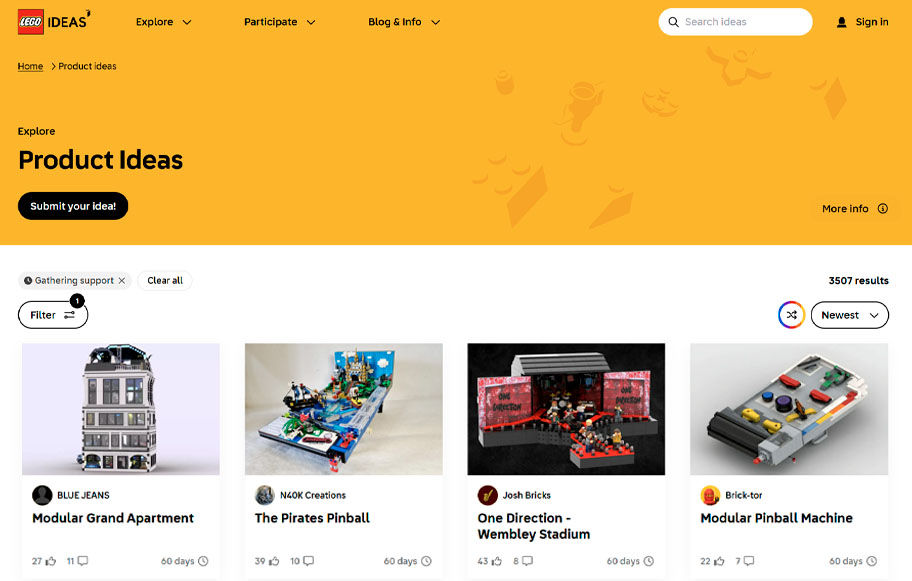
Take LEGO Ideas, for example.
This forum allows fans to post their concepts, vote on other people's ideas, and work together on designs. Successful entries turn into official LEGO sets, and the creators receive recognition and a percentage of the sale proceeds.
The Rise of Sustainable Consumerism and Ethical Research Practices
Over the last few years, there has been an increase in the number of consumers who opt for products based not just on price or quality, but on whether a brand cares about the environment and treats its employees fairly.
This is why market research has shifted the focus towards aspects such as:
How many customers are concerned about social issues and sustainability
What kind of ethical behavior do people expect from companies
How companies should discuss these issues.
At the same time, according to Customer Think, people also want to know how research is undertaken, meaning they want companies to be honest about data collection and managing personal information.

Digital and Influencer-Driven
According to WARC's 2025 Consumer Trends Report, 47% of social media users have made purchases based on suggestions from influencers, with trustworthiness being the most important factor.
This has led researchers to incorporate sentiment analysis and social listening tools into their research.
To be able to collect valuable insights, market research has to evolve, making use of digital channels such as:
Influencer partnerships for surveys.
Examining user-generated content.
Applying AI-driven tools to simulate purchase paths.

Anticipating Challenges in Market Research
Although market research has a bright and innovative future, there are obstacles to overcome, with some of the biggest ones being:
1. Addressing Data Privacy Concerns and Regulations
Nowadays, many customers express concerns about the misuse of their information, which can lead to them losing trust in a brand, especially if there has been a data breach.
Legal frameworks such as the General Data Protection Regulation (GDPR) in the EU and the California Consumer Privacy Act (CCPA) are becoming stricter, and more regulations are expected in the near future.
To address this, companies must:
Gain permission from people.
Offer easy ways to say ‘No’.
Keep data anonymous or grouped. For example, instead of tracking ‘User X purchased item Y on date Z,’ a company could report ‘25-34-year-olds in Miami bought 500 units of category Y last month.’ This reduces the risk of re-identification.
Be honest about how data is used.
It is also important that companies use AI openly and fairly.
2. Preparing for Rapid Technological Changes
Research teams find it difficult to keep pace with rapid tech changes, both financially and in terms of expertise.
With that in mind, companies must cultivate a culture of ongoing experimentation and learning, and the key considerations to achieve this include:
Approaching new technology testing as a routine rather than a one-off experiment.
2025 data showed that 46% of researchers expected their AI-related budgets would increase in the next year, according to Rivaltech.
Develop strong ties with technology providers while remaining active in the research tech community.
Companies that specialize in research software can provide training, webinars, and early access to new features.
Attending industry conferences or participating in online forums can also help teams to stay informed about what lies ahead.

Help in-house teams to learn new skills to leverage new tech.
3. Overcoming Resistance to Change Within Organizations
Every organization is likely to have people who are reluctant to embrace new technology because they either find it difficult or they don’t trust it, or both. Usually, these people prefer more traditional approaches.
And although they might have a point since everything that LLM models provide should be verified, considering that models like Grok, ChatGPT, Copilot, Perplexity, Gemini, and others can hallucinate and provide data that simply isn’t true, technological evolution is here to stay, and so embracing it is imperative.
There is also a gap between employees and management in terms of confidence in AI. For example, in a Qualtrics report, 83% of leaders surveyed believe that AI tools increase the efficiency of their teams, while only 65% of people who actually use those AI tools agree with this.
This sort of mismatch could lead to conflict when the team on the ground feels overwhelmed or uncertain while the leadership pushes for more technology and insight-driven choices.
There are several ways to overcome the issue:
Resistance to change can be addressed via a combination of education, communication, and persistence.
1. Education
Concrete, real-world examples help to shift mindsets. It is important to show clear wins, such as an AI analytics platform that reveals insights that manual analysis missed.
It is best to start with small pilot projects where teams can gain firsthand experience and understand the benefits for themselves.
2. Communication
Researchers should provide a clear explanation of how roles shift and why the company and the employee will benefit from these changes.
One thing that many employees fear is that AI will replace their jobs, which is why, for the leadership, it is important to make it clear that AI is intended to help human expertise, not replace it.
3. Patience and persistence
Cultural transformation takes time. However, the penalty for inactivity is high: teams that fail to develop risk losing value, significance, and money.

Final word
Technology is opening doors for deeper and quicker market insights. Customers are also driving change, expecting businesses to be more transparent, personalized, and ethical.
In general, market research appears to have a bright future for those who are open to change and innovation.


